Line 02 · KURITE Color
Synthetic iron oxides made for cement. They go in the mix, not on the surface — so the color is the slab, not a film that weathers off.
Why these oxides
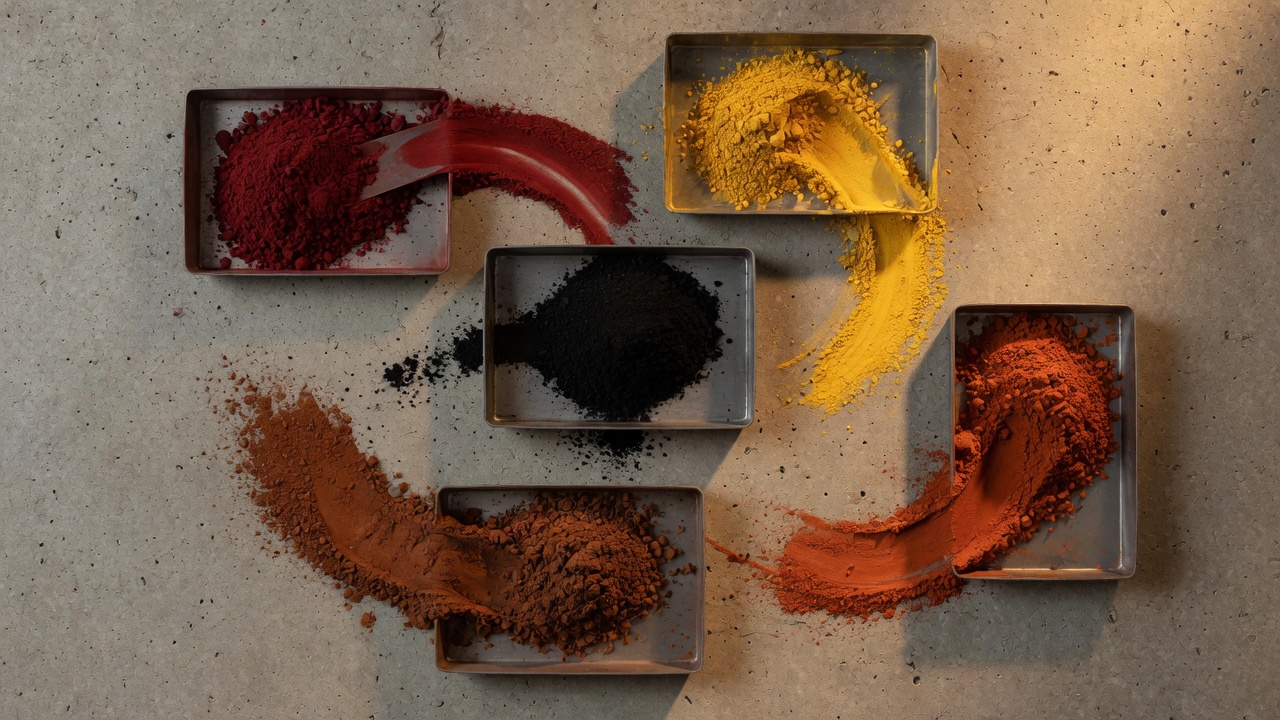
KURITE Color pigments are lightfast, alkali-stable iron oxides for integrally colored concrete, mortar, and related cementitious mixes. They are specified against ASTM C979 and sit in the same family of practice as EN 12878 — pigments for coloring building materials based on cement.
Use them with our PP, TW50, or AR glass. Dose fiber with the aggregate, then the oxide, and mix until the shade is even.
Starting palette
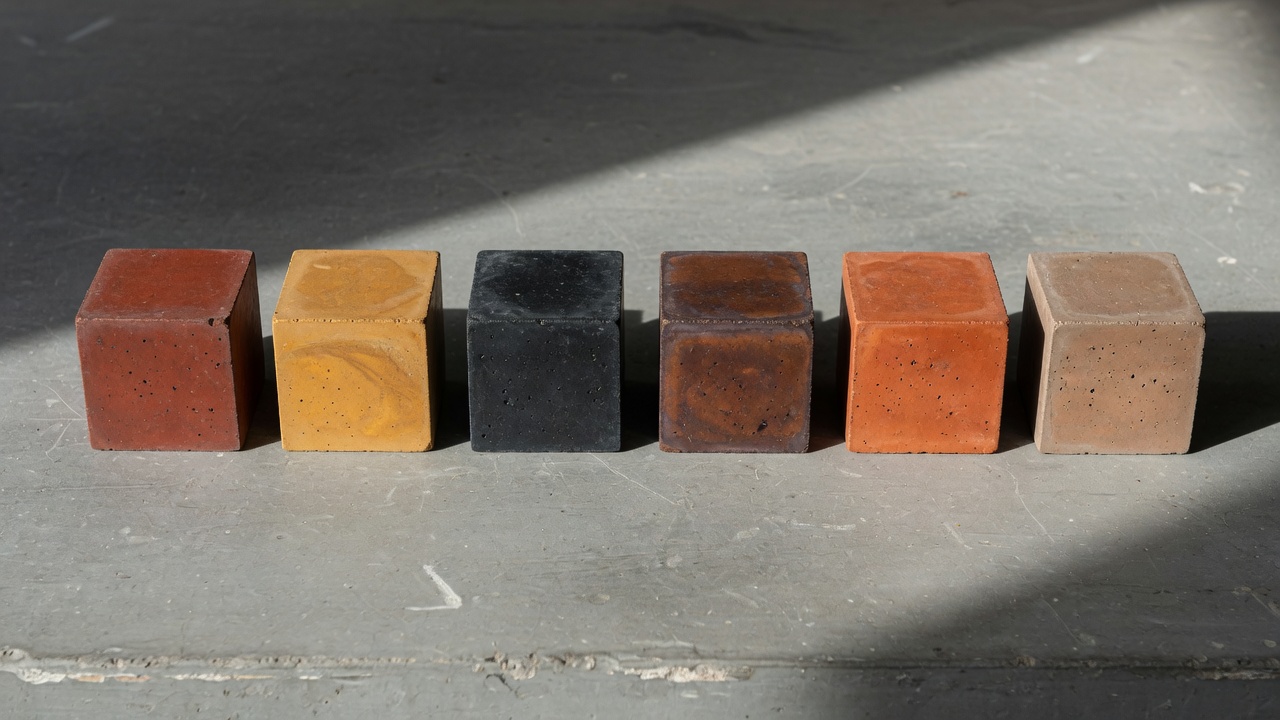
These chips are a screen. Cement color, water, finishing, and cure move the final shade. Ask for a color card or three sample cubes before you lock a facade. Doses are starting points in pounds of powder per 94 lb sack of cement.
How to buy
Pigments ship as trial sacks, contractor bags, or plant pallets. Pricing moves with color, form, and volume — so this line is quote-first.
Iron oxides used in concrete are among the most light-stable architectural pigments. Surface wear can lighten a finish if the paste is weak — that is a mix and curing issue, not dye washout.
Yes. PP micro, TW50, and AR glass are all compatible with integral color. Dose fiber first or with aggregate, then color, and mix until the shade is even.
Most architectural work lands between 2% and 5% of cementitious weight. Below 1% the shade is a tint; above 7% you are usually wasting pigment. We will set a start point from your cement and target chip.
Carbon black tints hard with a small dose. Iron oxide black needs more pigment but is the more reliable outdoor inorganic. If the slab lives in the weather, start with Oxide Black and a cube — not a screen swatch.